
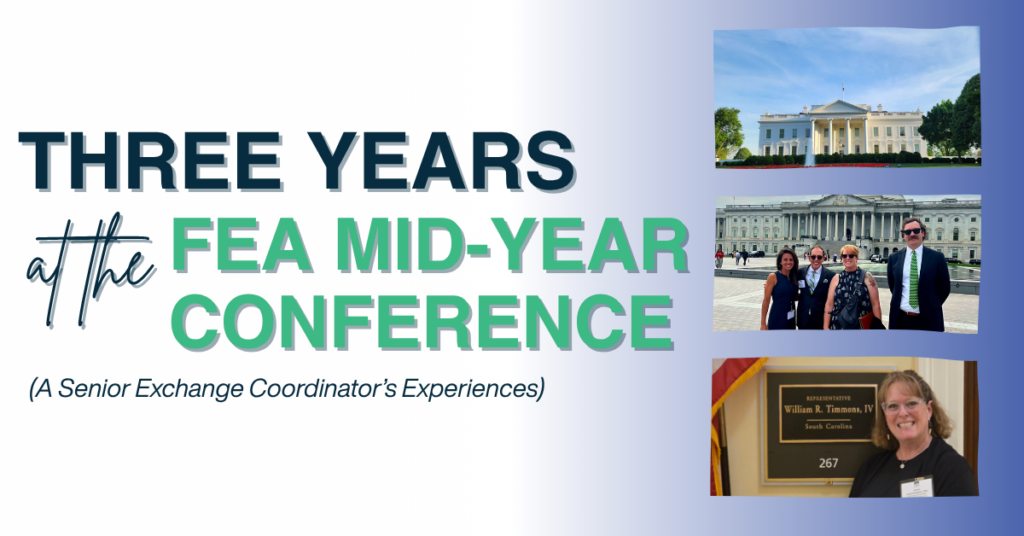
Before attending the FEA Mid-Year Conference, my face-to-face interactions with politicians and policymakers had been fairly limited but interestingly varied throughout my life. Growing up, I was exposed to public service and politics through my father, who worked security detail for Frankie Sue Del Papa during her time as Nevada Secretary of State, and later for Bob Miller while he served as Nevada’s Lieutenant Governor. In 1992, I even had the opportunity to meet Ross Perot while he was campaigning through Nevada during his presidential run, after my dad helped run his campaign office in Reno.
In high school, I was involved in JROTC and participated in Color Guard, which gave me the opportunity to attend ceremonies with dignitaries and public officials. Over the years, I’ve also attended rallies, sat in at city council meetings, and even had casual conversations with my local mayor while standing in line at a neighborhood coffee shop.
But advocacy on Capitol Hill? That was entirely different.
During the conference itself, I was surrounded by fellow Federation of Exchange Accommodators attendees—industry professionals focused on education, collaboration, and the future of 1031 exchanges.
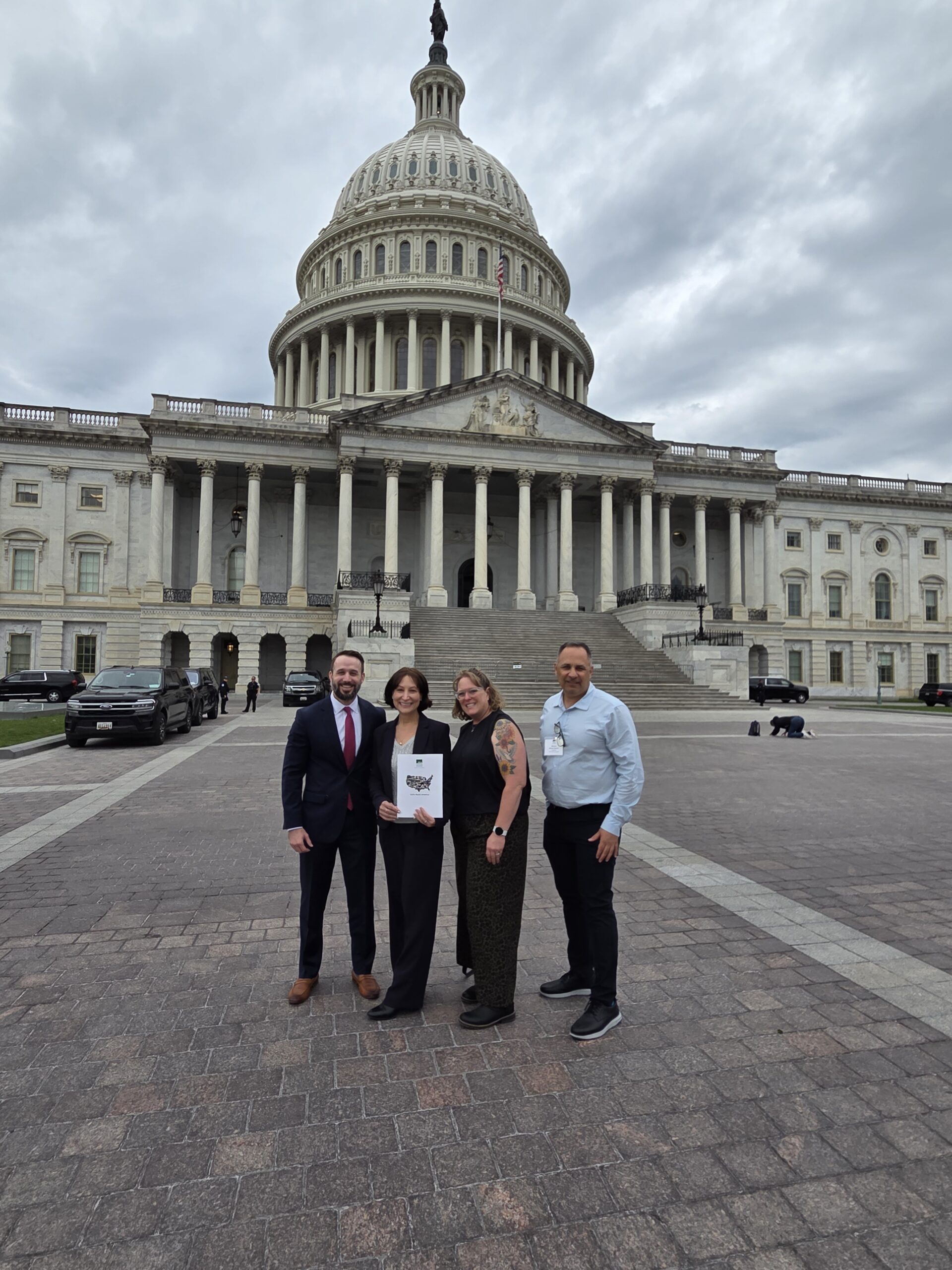
But when we broke out into small groups and headed to Capitol Hill—that’s when everything changed.
Year One: Taking It All In
That first year felt a lot like standing at the start line of a race you’ve trained for but still wondering if you’re truly ready.
When we headed to Capitol Hill, I was grouped with professionals from South Dakota, Texas, North Carolina, and South Carolina. Right away, it was clear our perspectives were shaped by very different markets, clients, and regional priorities. Those differences mattered.
In states like South Dakota and Texas, where there is no state income tax, many conversations centered around 1031 exchanges primarily as a tool for deferring federal capital gains taxes. But even within that shared federal focus, the impact looked very different from state to state.
In South Dakota, discussions often centered around how exchanges help shape rural land ownership, agricultural property, and small-town businesses. In Texas, the conversation frequently tied back to cattle operations, farmland, and large agricultural holdings.
Meanwhile, in South Carolina and North Carolina, the perspective felt different. There was a strong emphasis on generational wealth, preservation of legacy properties, historic family holdings, and “old money” real estate that has often been held for decades.
Listening to those conversations expanded my understanding of 1031 exchanges beyond the transactions I handled day to day. I began to see how these exchanges influence not just individual investors but industries, communities, farmland, history, and family legacies across the country.
During that first year, I listened more than I spoke. I took it all in. And somewhere in those meetings, it clicked…This work matters on a much bigger scale than I had fully appreciated.
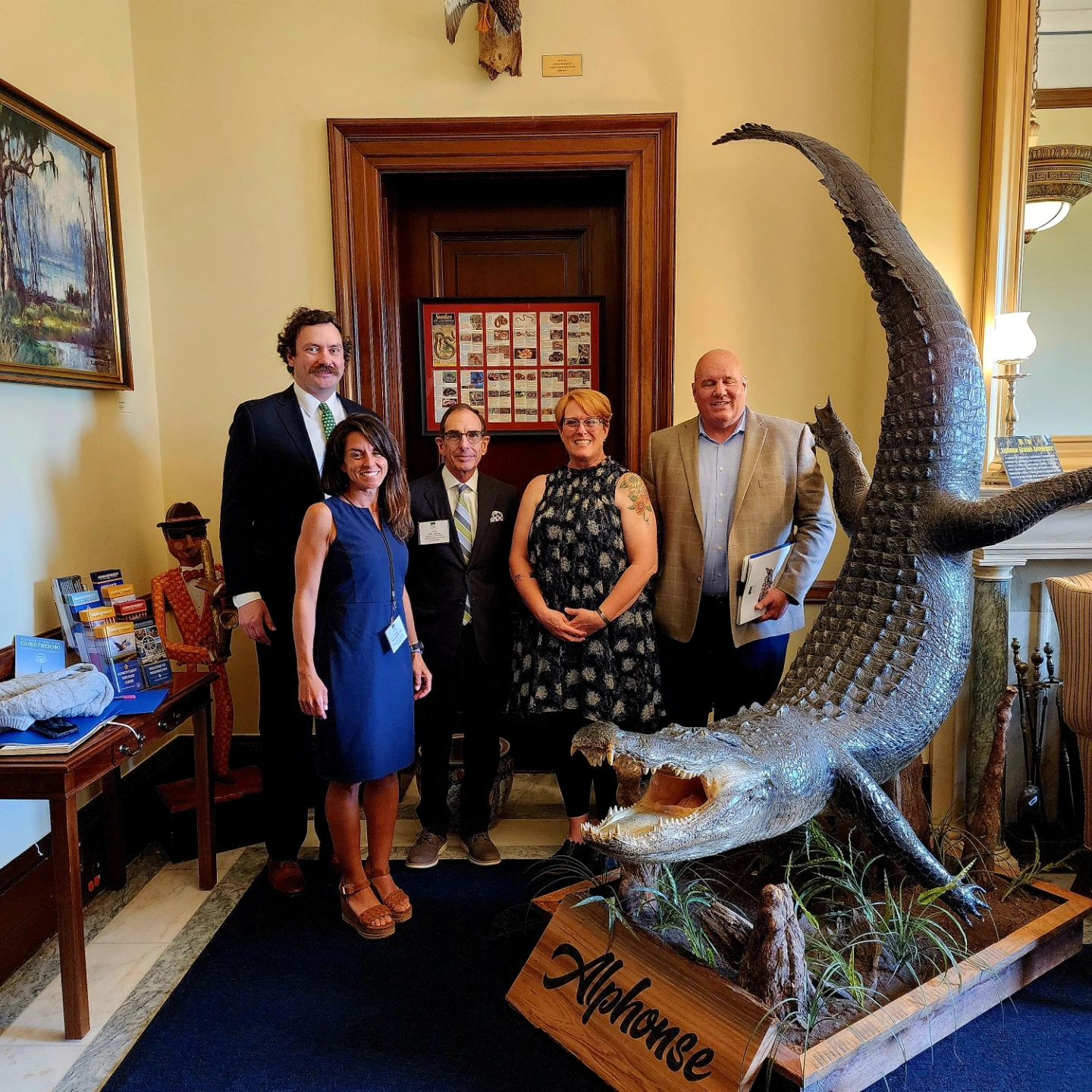
And because Capitol Hill always seems to offer at least one unexpected moment, I also had the chance to meet “Alphonse,” the famous alligator housed in the office of Sen. John Kennedy. It was one of those uniquely Washington moments. It was equal parts unexpected, memorable, and a reminder that even in serious policy discussions, there’s still room for personality and a good story.
Year Two: Finding My Voice
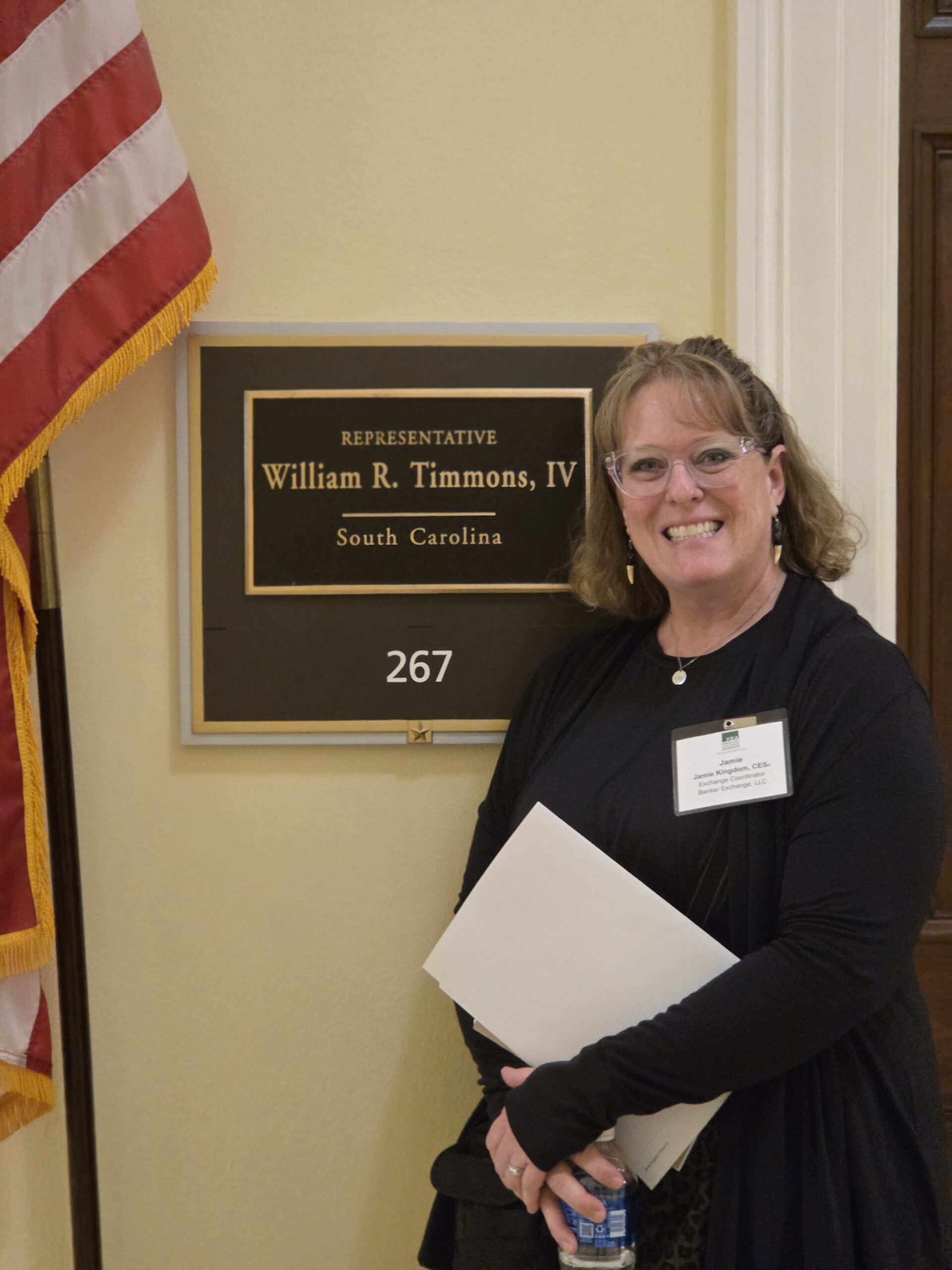
By the second year, something shifted. After the conference sessions, we broke into our Capitol Hill groups again. This time I was grouped with professionals from South Carolina, Tennessee, Georgia, and Alabama. The conversations became more focused, more regional, and honestly…more relatable.
Most of the staffers and Representatives we met with were already supportive of 1031 exchanges. They understood the value and were ready to stand behind them. And when that happens? The conversation opens up. Which, in the South, naturally led us to college football.
Now, as someone who is not into college football, these were probably the most challenging conversations of the entire trip for me. Tax policy? 1031 exchanges? Real estate strategy? I was completely comfortable. SEC rivalries and football history? I mostly smiled, listened, and tried not to accidentally support the wrong team in the wrong room.
But here’s the thing; I truly believe those lighter moments mattered just as much as the more serious conversations about 1031s. They built connections. They created common ground. And for me, they marked a turning point. I wasn’t just observing anymore; I was engaging, contributing, and finding my voice.
Year Three: Showing Up with Purpose
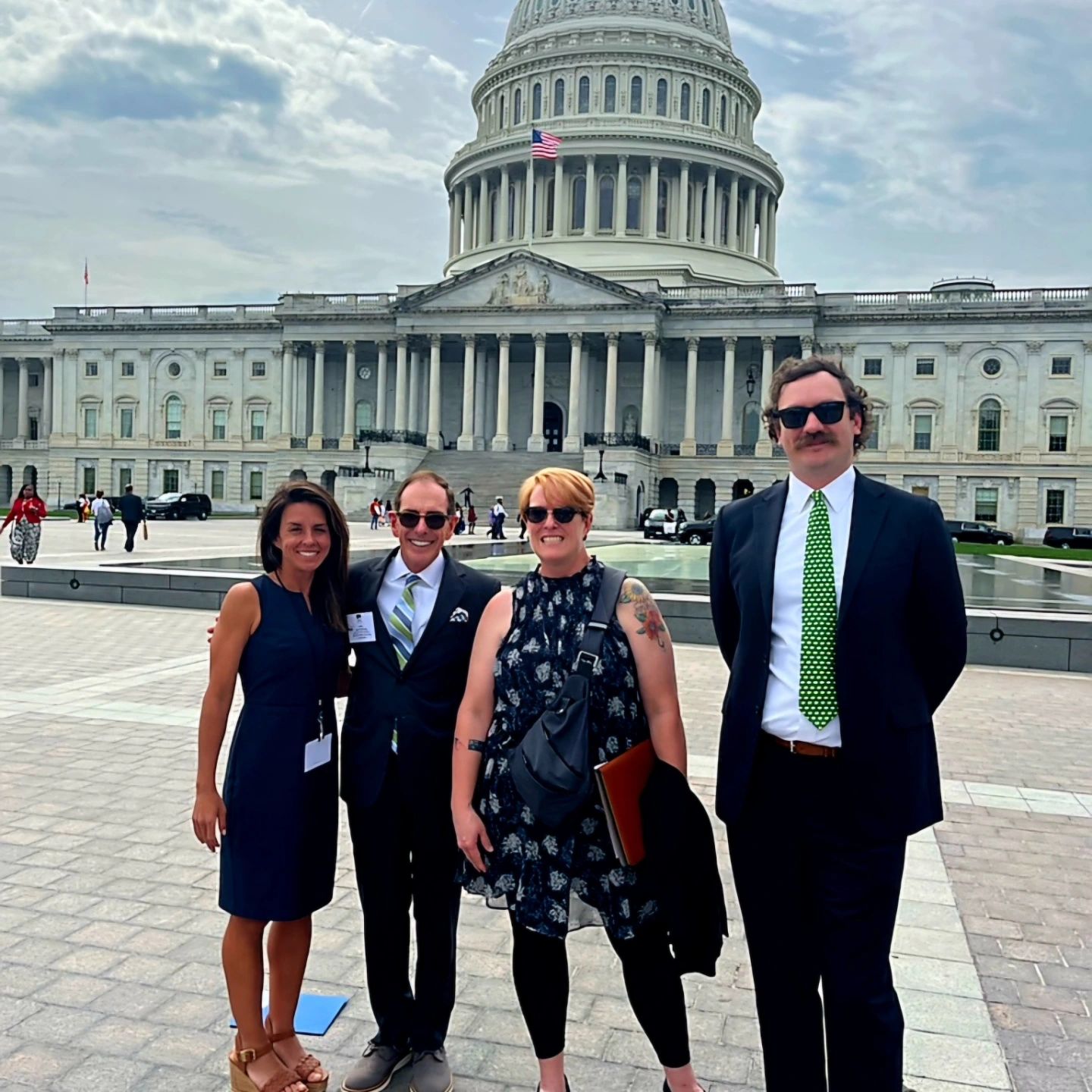
This year felt different in the best way. After another round of conference sessions, we headed to Capitol Hill with a group from North Carolina, South Carolina, Georgia, and Florida and the conversations were dialed in.
We weren’t just explaining what 1031 exchanges are; we were sharing why they matter and why it’s important to continue advocating for them, even when they’re not under immediate threat. Most of the delegates we met had some familiarity with 1031s, and many were supportive. But this year, we took it a step further.
The message was simple:
Section 1031 is not a tax loophole. Anyone can utilize a 1031 exchange. There is no minimum value, and no transaction is too small. Whether it’s a farmer in rural South Carolina, a small business owner with a suburban strip mall, or a large-scale investor in a major city, Section 1031 works for them. And the economic impact speaks for itself.
According to a 2022 Ernst & Young macroeconomic study, Section 1031 like-kind exchanges:
Those conversations reminded me that advocacy is not always about defending something that is actively under attack. Sometimes it’s about continuing to educate, reinforce value, and ensure policymakers understand the real-world impact these exchanges have on everyday Americans and local communities
The Mid-Year Conference provided a platform where we could talk about how 1031 exchanges strengthen communities, encourage reinvestment, and create opportunities for individuals and families to build and preserve wealth over generations.
We discussed how 1031 exchanges help keep investment capital moving instead of sitting stagnant. How they allow aging landlords to transition properties to new ownership without forcing an immediate tax burden. How farmers and landowners can reposition acreage to better support their operations. How small business owners can move from one property into another that better serves their community and long-term goals.
We talked about historic buildings being restored instead of abandoned. Rural land staying productive. Downtown properties being revitalized. Apartment complexes being improved. Families being able to transition investment properties as markets and life circumstances change.
And perhaps most importantly, we talked about accessibility.
There’s a misconception that 1031 exchanges are reserved for the ultra-wealthy or large institutional investors, but that simply isn’t true. Some of the most meaningful exchanges involve everyday people; individuals who spent years building equity in a single rental property, family farm, small commercial building, or piece of inherited land.
That’s why these conversations matter.
We weren’t speaking in abstract policy language; we were talking about real people, real properties, and real communities. In several meetings, those discussions even shifted into how elected officials, staffers, or their own families could potentially use 1031 exchanges as part of long-term investment and estate planning strategies in their own lives.
Trip Highlight
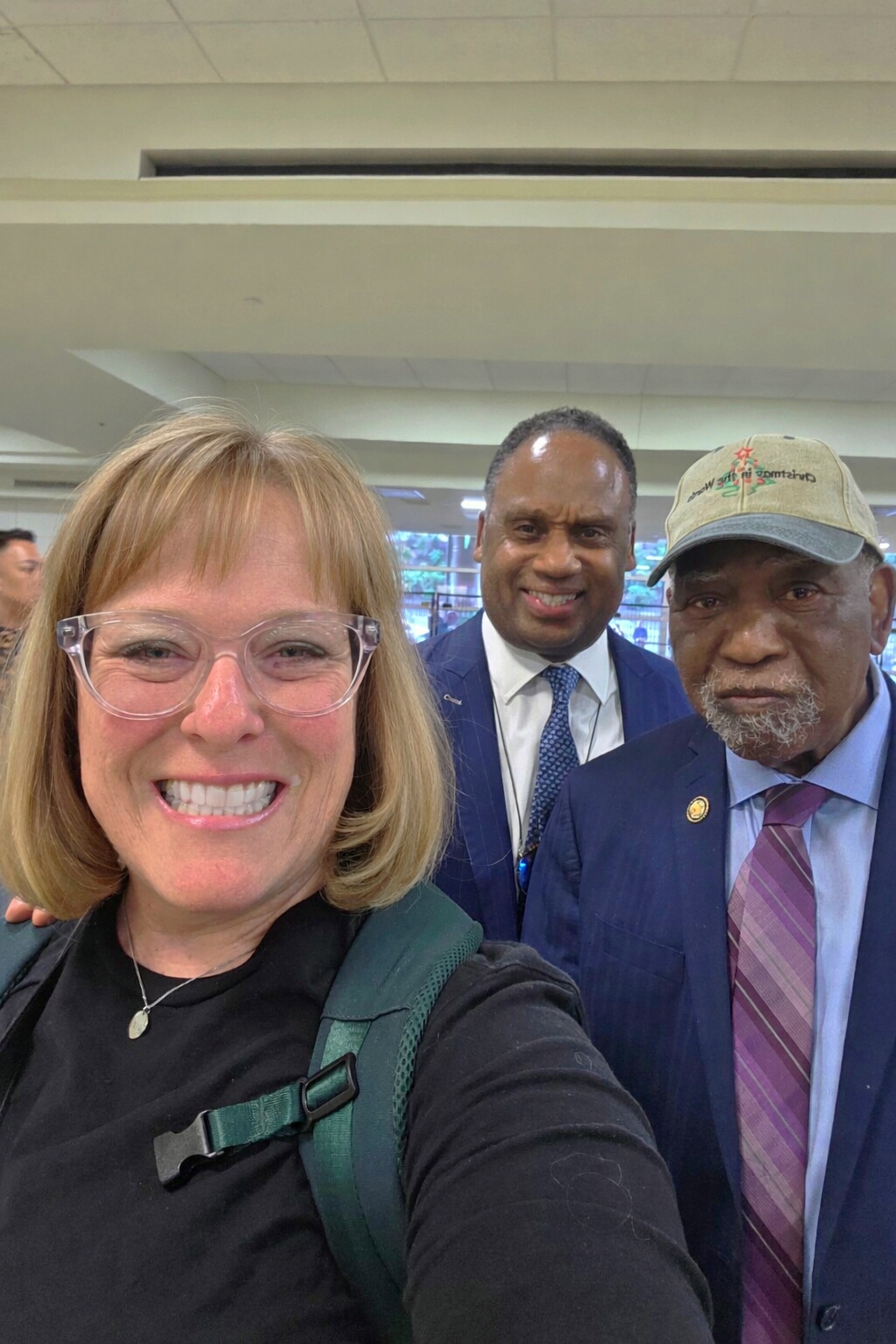
One of the highlights of the trip was meeting Rep. Ralph Norman (SC), who is also a gubernatorial candidate for SC. We had the chance to talk about his platform, his personal involvement with 1031 exchanges, and the role they play beyond policy.
Before we left, he gifted our group one of his commemorative coins. It was a small gesture, but one that made the moment feel even more meaningful. For me, it instantly became more than just a keepsake from a trip to Washington.
That coin now sits protected in a display case in my home alongside other pieces of personal memorabilia collected throughout different moments in my life: a Ross Perot campaign watch, a signed Boston Red Sox jersey, and an autographed hockey puck from Wayne Gretzky. Each item represents a moment, a memory, or an experience that stayed with me long after it happened.
And now, that coin represents an entire chapter of learning how advocacy, policy, relationships, and real-world impact all intersect in ways I never fully understood before walking the halls of Capitol Hill.
Why the FEA Mid-Year Conference Sticks with Me
Each year has built on the last.
From learning…
To engaging…
To advocating.
You don’t show up fully confident. You don’t walk in as the strongest voice in the room. You grow into it. And somewhere along the way, you realize that you’re not just attending. You're contributing.
I’m grateful to be part of this experience alongside so many professionals who care deeply about this industry and the people it serves.
And you better believe I’ll be back next year…more excited, more prepared, and ready to keep showing up.